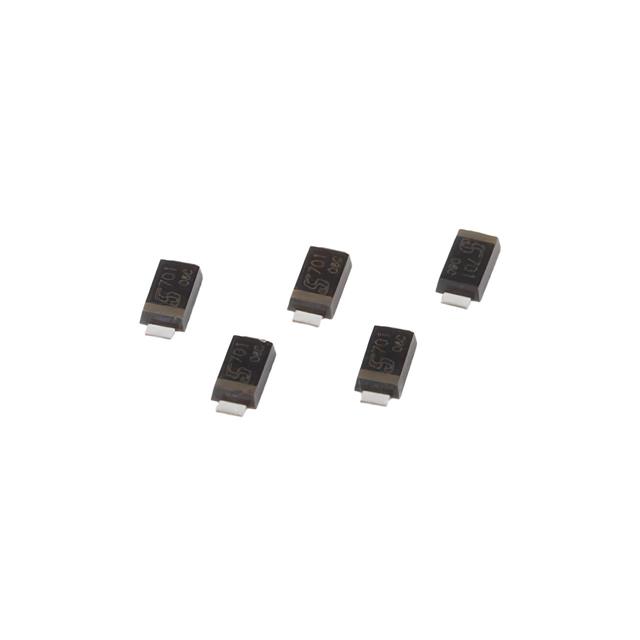
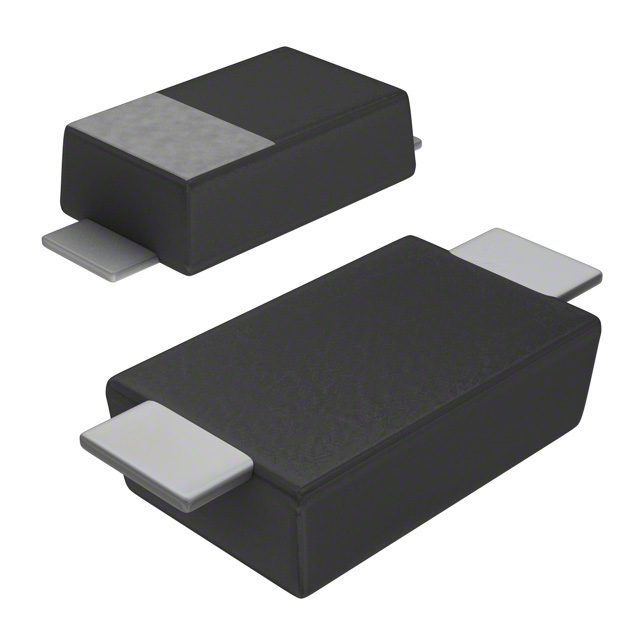





A discrete semiconductor is a single electronic device made from semiconductor material that performs one specific function, such as switching or rectifying. Common examples include diodes and transistors. It is not integrated into a chip and operates as an independent component within a circuit.
In electronics, discrete means "separate" or "individual." A discrete component is a standalone part that performs one function on its own, rather than being combined with multiple components inside an integrated circuit (IC).
Discrete components are single-function devices such as transistors, diodes, resistors, and capacitors. Integrated circuits (ICs) combine many electronic components into one chip to perform more complex functions. In general, discrete components are simpler and more flexible, while ICs are more compact and highly integrated.
The main types of discrete semiconductors include diodes, transistors, thyristors, and power MOSFETs. These components are widely used for switching, signal control, rectification, and power management in electronic systems.
Discrete power semiconductor devices are standalone components designed to handle high voltage and high current. Common examples include power diodes, power MOSFETs, IGBTs, and thyristors, which are used in power supplies, motor drives, and energy systems.
Yes, a diode is a discrete semiconductor device. It is a single-component device that allows current to flow in one direction only, making it widely used in rectification and circuit protection applications.
Yes, discrete transistors are still widely used today. They are commonly found in power management circuits, amplifiers, switching applications, and industrial electronics where specific performance, flexibility, or high power handling is required.
An example of a discrete electrical component is a transistor. Other common examples include diodes, resistors, capacitors, and inductors, each performing a single function within an electronic circuit.
Submit your requirement to source discrete semiconductors, including diodes, transistors, thyristors, and power MOSFETs. OEM STOCK supports global procurement teams with fast availability matching, obsolete component sourcing, and reliable electronic component supply solutions for discrete semiconductor devices.
Discrete semiconductors are individual semiconductor devices designed to perform a single electrical function such as switching, amplification, rectification, or signal isolation. Unlike integrated circuits (ICs), which combine millions or even billions of transistors on a single chip, discrete devices operate independently as standalone components within electronic circuits.
Because of their modular nature, discrete semiconductor devices provide engineers with precise control over circuit performance, making them essential in high-power, high-voltage, and thermally demanding applications.
Common examples of discrete semiconductor components include diodes, transistors, thyristors, and optoelectronic devices.
Discrete semiconductor components are classified based on their electrical function and application in modern electronic systems:
Discrete semiconductors are widely used across industries due to their reliability, efficiency, and power-handling capabilities.
These devices are critical in applications requiring efficient energy conversion, stable thermal performance, and precise electrical control.
In modern electronics, discrete semiconductor devices are often combined with integrated circuits to build hybrid systems. While ICs handle logic and computation, discrete components manage power delivery, protection, and signal conditioning.
This combination is essential in systems such as electric vehicles, renewable energy inverters, and industrial automation platforms.
As part of the global semiconductor supply chain, OEM STOCK provides sourcing solutions for discrete semiconductor devices and other electronic components.
We support procurement teams, engineers, and manufacturers in managing shortages, sourcing obsolete components, and ensuring stable production continuity.
 Upload