Upload


D Sub Connector Pinout Guide: Wiring, Specifications & Industrial Applications
9/16/2025 10:00:16 AM
The D Sub connector (also known as the D-subminiature or simply D-type connector) is a widely used electrical connector in industrial systems, communication equipment, and control applications. With its compact structure, high reliability, and easy wiring features, it has remained a preferred choice for engineers and technicians for decades.
Key Advantages of D Sub Connectors
Compact Design – Multiple contact points are integrated into a small footprint, saving space in devices.
High Reliability – Contacts are made of quality conductive materials, offering durability and stable performance.
Easy Wiring – Plug-and-play style connectors make installation and maintenance simple.
Strong Environmental Protection – Many models are designed with dust-proof and waterproof ratings for harsh industrial environments.
Pins 18–25: Ground
Computers & Legacy Devices: Serial and parallel ports.
Video Systems: VGA and related display interfaces.
Telecom & Networking: Data transmission and test equipment.
Aerospace & Defense: Ruggedized connectors for mission-critical systems.
Whether you are wiring an RS-232 DE-9, a DB-25 parallel port, or a high-density VGA connector, the D Sub connector continues to be an essential component in modern and legacy systems alike.
A: The correct term is DE-9, but many still call it DB9. Both refer to the same 9-pin connector used in RS-232 communication.
Q2: Can a D Sub connector carry both power and data?
A: Yes, certain mixed-contact D Sub connectors can handle signal and power in the same housing.
Q3: Are D Sub connectors obsolete?
A: Not at all. While USB and HDMI dominate consumer electronics, D Sub connectors remain indispensable in industrial automation, aerospace, and specialized equipment.
This blog will provide a complete overview of the D Sub connector pinout, wiring practices, and technical specifications, while also sharing practical wiring tips and safety considerations for industrial applications.
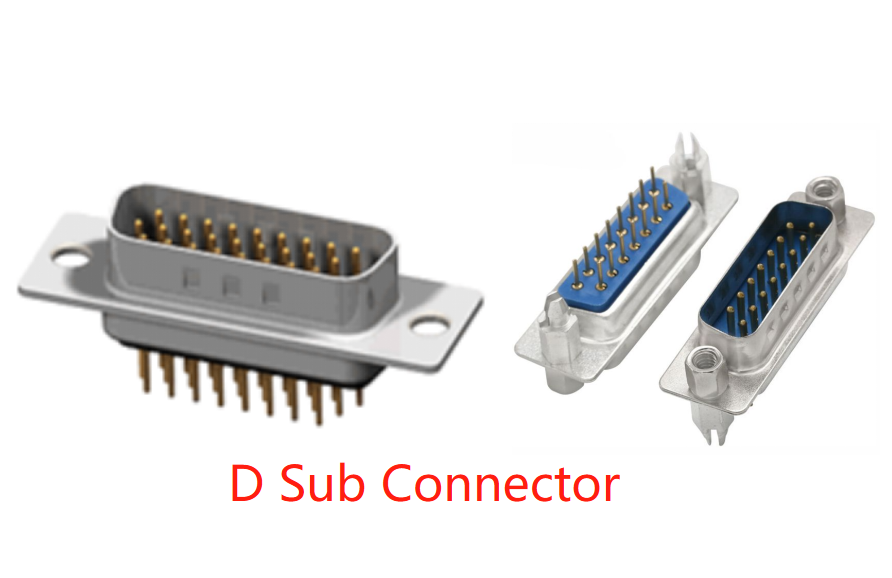
What Is a D Sub Connector?
The D Sub connector is named after its D-shaped shell that ensures correct orientation and mechanical stability. Typically, it comes with multiple contacts to transmit signals or power simultaneously.Key Advantages of D Sub Connectors
Compact Design – Multiple contact points are integrated into a small footprint, saving space in devices.
High Reliability – Contacts are made of quality conductive materials, offering durability and stable performance.
Easy Wiring – Plug-and-play style connectors make installation and maintenance simple.
Strong Environmental Protection – Many models are designed with dust-proof and waterproof ratings for harsh industrial environments.
Common D Sub Connector Pinouts
1. DE-9 (9-pin D Sub) – RS-232 Serial Port
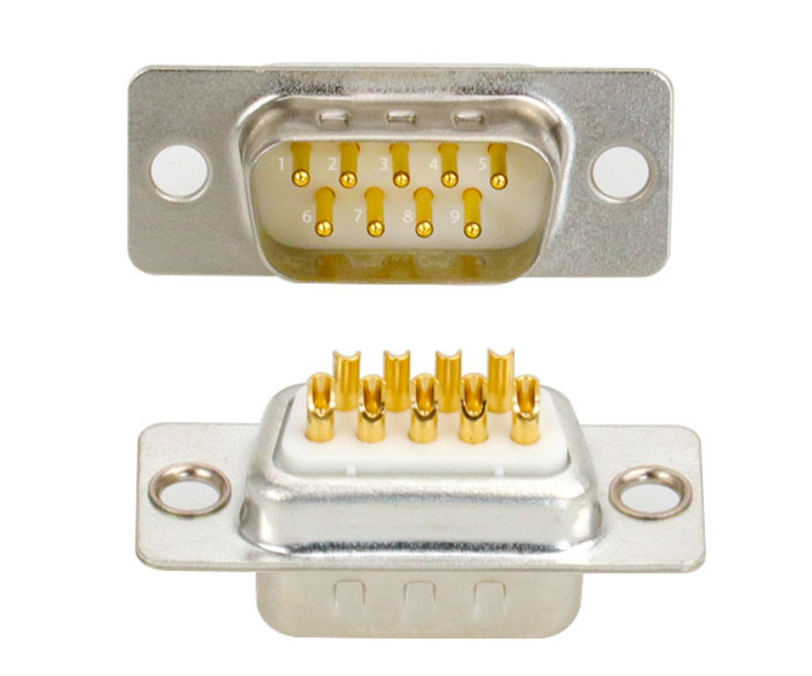
| Pin | Signal | Description |
|---|---|---|
| 1 | DCD | Data Carrier Detect |
| 2 | RXD | Receive Data |
| 3 | TXD | Transmit Data |
| 4 | DTR | Data Terminal Ready |
| 5 | GND | Ground |
| 6 | DSR | Data Set Ready |
| 7 | RTS | Request to Send |
| 8 | CTS | Clear to Send |
| 9 | RI | Ring Indicator |
2. DB-25 (25-pin) – Parallel/Serial Communication
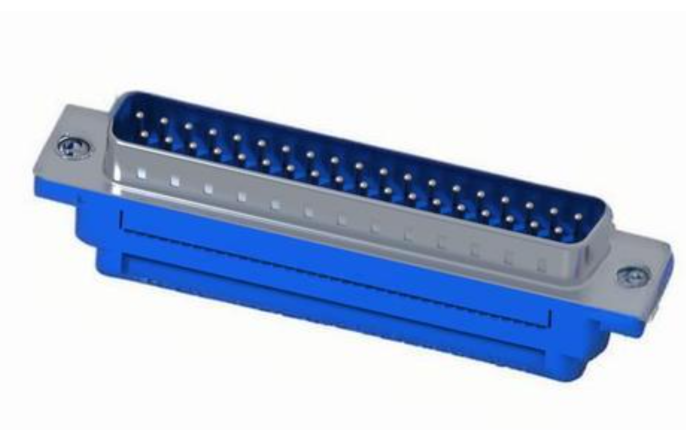
Pins 1–9: Data lines
Pins 10–17: Control & status signalsPins 18–25: Ground
3. HD15 – VGA Video Connector
Widely used for analog video signals in displays and projectors.
Technical Specifications & Standards
D subconnectorschemaswereformalized tohavebetterconsistency in operations.Crucial specifications include:
Electrical Ratings:
- Voltage: Typically 250–500 V
- Now: 3-5 A per contact (dependsonpin size)
- BetweenContact Resistance: Typicallylowerthan 20 mΩ
Mechanical Durability:
- Rated for 200–500 mating cycles
- Durablegoldor tin plating for alonglifeofuse
Environmental Specs:
- Operating temperature: –55°C to +125°C
- EMI/RFI shielding with metal shells
Standards Compliance:
- RS232, RS422 and RS485signalconversionprotocoltypes
- MIL-C-24308specfor military D-subconnectortypes
- These areitsfeaturesthatmakethemcapableofbeingused inarduousenvironments (laboratories and even aerospace).
Applications of D Sub Connectors
Industrial Automation: PLCs, CNC machines, robotics.Computers & Legacy Devices: Serial and parallel ports.
Video Systems: VGA and related display interfaces.
Telecom & Networking: Data transmission and test equipment.
Aerospace & Defense: Ruggedized connectors for mission-critical systems.
Conclusion
The D Sub connector combines compact design, reliability, and flexibility, making it a trusted solution across industries. By mastering its pinouts, wiring techniques, and technical specs, engineers can ensure safe and efficient operation.Whether you are wiring an RS-232 DE-9, a DB-25 parallel port, or a high-density VGA connector, the D Sub connector continues to be an essential component in modern and legacy systems alike.
D Sub connector FAQ
Q1: What is the difference between DB9 and DE9?A: The correct term is DE-9, but many still call it DB9. Both refer to the same 9-pin connector used in RS-232 communication.
Q2: Can a D Sub connector carry both power and data?
A: Yes, certain mixed-contact D Sub connectors can handle signal and power in the same housing.
Q3: Are D Sub connectors obsolete?
A: Not at all. While USB and HDMI dominate consumer electronics, D Sub connectors remain indispensable in industrial automation, aerospace, and specialized equipment.
Related information

- 2025.10.28 Choosing the Right LED Resistor for 12V LEDs