Upload


ESD Diode vs TVS Diode: Key Differences, Use Cases & Design Guide
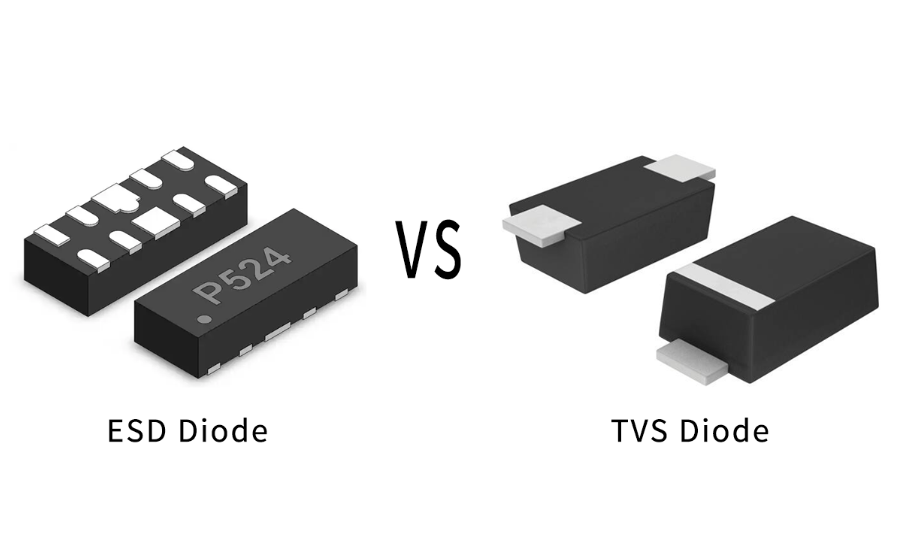
Engineers often ask whether an ESD diode and a TVS diode are interchangeable. They are not. While both protect against transient over-voltage, they are optimized for different threat profiles: ESD diodes focus on ultra-fast, low-energy discharges with minimal capacitance impact, while TVS diodes handle higher-energy surges and power-line transients. This guide helps you choose the right protection strategy for power rails and high-speed interfaces.
1) What is an ESD diode?
An ESD diode is a protection device designed to clamp extremely fast electrostatic discharge events, typically evaluated against IEC 61000-4-2. To maintain signal integrity, ESD diodes for high-speed lines are engineered for very low junction capacitance and are commonly implemented as multi-line ESD arrays.
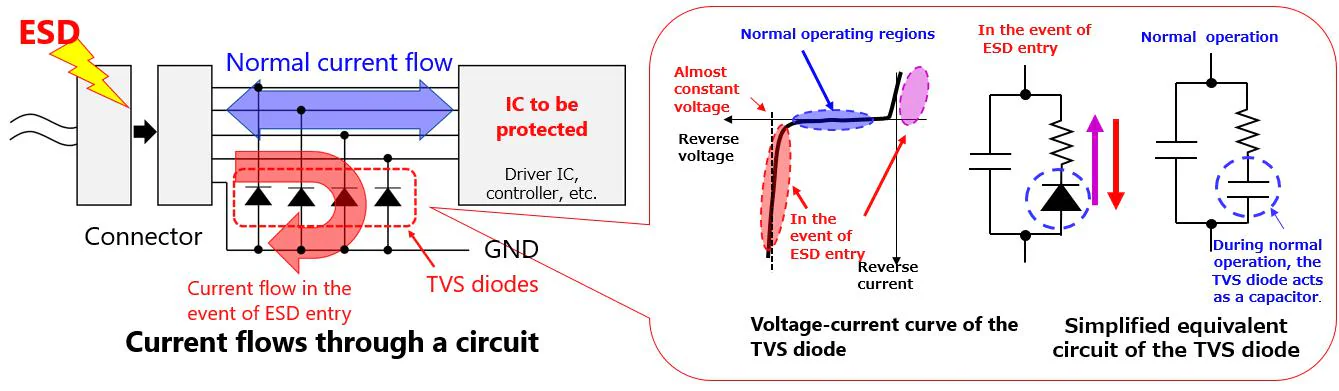
Typical protection targets include USB, HDMI, Ethernet PHY interfaces, LVDS/MIPI links, SIM/SD interfaces, and exposed GPIO lines.
2) What is a TVS diode?
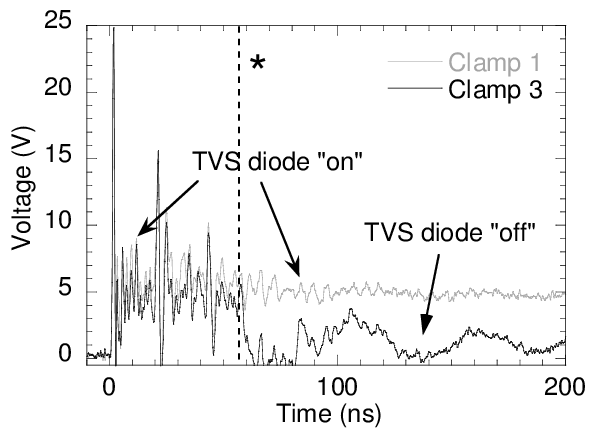
A TVS (Transient Voltage Suppressor) diode is designed to clamp higher-energy transient events, such as surge, EFT bursts, inductive load switching spikes, and power-line disturbances. TVS diodes are commonly used on DC rails and robust communication buses where energy handling is critical.
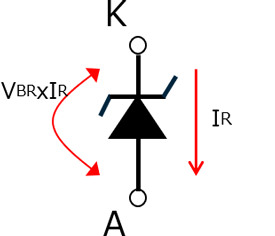
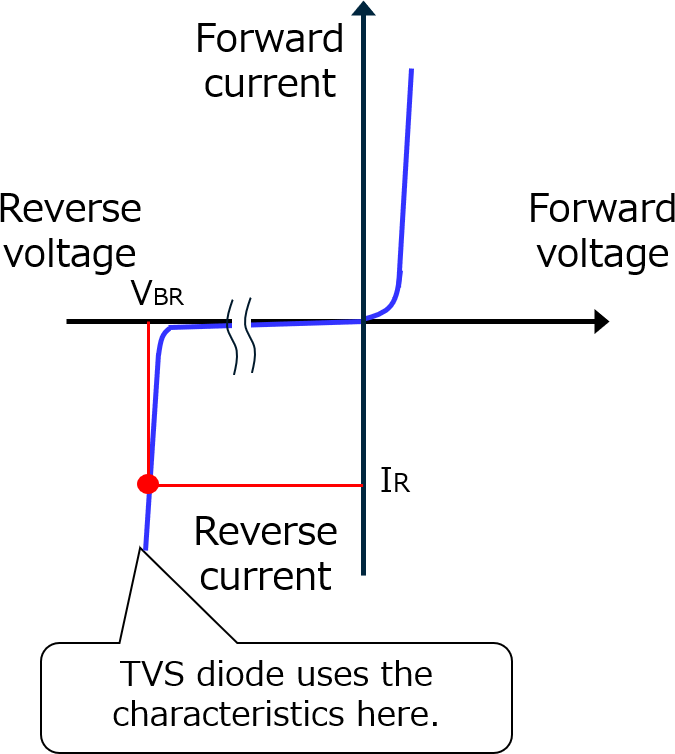
TVS diode symbol
TVS diodes are typically specified with parameters like VRWM, VBR, VC, IPP, and peak pulse power ratings (e.g., 400W / 600W / 1500W).
3) Key differences: ESD diode vs TVS diode
| Parameter | ESD Diode | TVS Diode |
|---|---|---|
| Primary purpose | ESD protection on sensitive I/O | Surge/transient suppression (higher energy) |
| Typical threat | IEC 61000-4-2 ESD pulses | EFT/surge, inductive switching, power disturbances |
| Capacitance | Ultra-low (often sub-pF to a few pF) | Low to moderate (depends on device class) |
| Energy capability | Low | High |
| Typical packaging | DFN/SOD arrays, multi-line protectors | SMA/SMB/SMC, axial packages |
| Where it shines | High-speed interfaces & sensitive I/O | Power rails, industrial buses, harsh environments |
4) Real-world use cases (power rails vs high-speed)
4.1 Why ESD diodes fail on DC power lines
A common mistake is applying ESD arrays to protect a DC input (5V/12V/24V). Power-line events often carry significantly more energy than an ESD diode is designed to absorb. Repetitive stress can increase leakage or cause short failures. For power entry, a properly rated TVS diode is the typical solution.
4.2 Why TVS diodes can break high-speed links
Over-protecting USB/HDMI/Ethernet lines with a high-power TVS diode may introduce excessive capacitance and stub effects, causing eye-diagram collapse or protocol instability. High-speed interfaces usually need low-capacitance ESD arrays placed close to the connector, with careful routing to minimize stubs.
5) When to use both (layered protection)
In industrial and automotive products, layered protection is often the most reliable approach:
- TVS diode at the power entry or bus entry to handle higher energy.
- ESD diode array near the external connector pins to protect sensitive I/O and preserve signal integrity.
- Optional filters: ferrite beads, common-mode chokes, series resistors (application dependent).
6) Quick decision guide
Choose an ESD diode if:
- The line is a high-speed interface (USB, HDMI, Ethernet, MIPI, LVDS).
- ESD from user contact is the main threat.
- You need ultra-low capacitance to preserve signal quality.
Choose a TVS diode if:
- The line is a DC rail or industrial bus.
- The threat includes surge/EFT or inductive switching energy.
- You need higher IPP and peak power capability.
Use both if:
- You have external connectors in harsh environments (industrial/automotive).
- Regulatory compliance requires better immunity margin.
7) Standards & compliance notes
Professional protection designs often reference international standards to define expected waveforms and severity levels:
- IEC 61000-4-2 - ESD immunity
- IEC 61000-4-4 - Electrical fast transient (EFT/burst)
- IEC 61000-4-5 - Surge immunity
- ISO 7637 - Automotive transient disturbance test methods
Including standards in your design documentation also improves content credibility for engineers and reinforces E-E-A-T signals for search engines.
8) Common mistakes & how to avoid them
-
Mistake: Treating "TVS" and "ESD diode" as the same thing.
Fix: Match the device to the threat profile (energy vs capacitance). -
Mistake: Placing protection far away from the connector.
Fix: Place protection at the entry point and minimize stub length. -
Mistake: Poor grounding and long return loops.
Fix: Use multiple stitching vias and wide ground paths near the device. -
Mistake: Selecting an overly large TVS on high-speed lines.
Fix: Use low-cap arrays specifically rated for high-speed interfaces.
9) FAQ
Can an ESD diode replace a TVS diode?
Usually not. ESD diodes are optimized for fast IEC 61000-4-2 pulses and low capacitance. They typically cannot absorb higher surge energy handled by TVS diodes on power rails or industrial buses.
Is a TVS diode enough for USB or HDMI protection?
Often not. TVS diodes may have higher capacitance and can degrade high-speed signals. USB/HDMI typically require low-capacitance ESD diode arrays placed close to the connector.
Where should I place ESD/TVS protection on the PCB?
Place devices close to the entry point (connector or power input) and use the shortest possible path to a solid ground reference with wide copper and multiple vias to reduce inductance.
When should I use both ESD and TVS devices?
Use layered protection in industrial/automotive environments: TVS for higher-energy transients on power entry or buses, and low-cap ESD arrays for high-speed signal lines.
Related information
- 2025.10.28 Choosing the Right LED Resistor for 12V LEDs