Home > Blogs  > Knowledge Center

LR44 vs 357 Battery – Real Differences, Specs, Interchange Guide and Expert Comparison

Published: Nov 12, 2025 Author: OEMStock team

Choosing between an LR44 and a 357 battery sounds simple-after all, both button cells are the same size and often sit side-by-side in retail packaging. But any technician who has serviced watches, digital calipers or medical thermometers knows that these two cells behave very differently once installed.
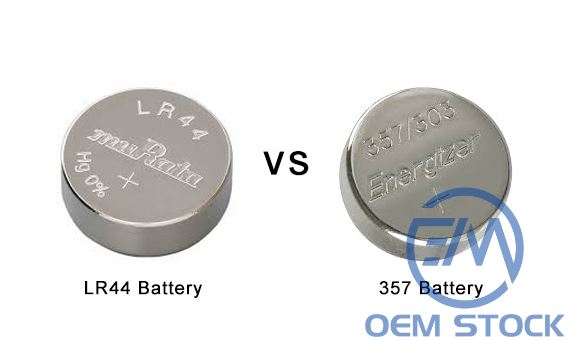
LR44 vs 357 Battery

This guide is written from the perspective of someone who works with precision electronics on a daily basis. Instead of repeating textbook definitions, we focus on the real-world behavior of LR44 and 357 cells, their chemistry, expected lifespan, and when it is actually safe to interchange them.

We also reference professional-grade brands like Energizer, Renata, Murata (Sony) and Maxell, since these companies publish detailed discharge curves and performance data used across the electronics industry.

1. The Real Difference Between LR44 and 357

Although both batteries share the same physical dimensions-11.6 mm in diameter and 5.4 mm in height-the similarities end there. The key difference is the chemistry:

  • LR44: Alkaline button cell, low cost, voltage declines steadily
  • 357 (SR44): Silver-oxide button cell, highly stable output, longer lifespan

Chemistry alone affects almost everything else: power stability, lifespan, price, and the types of devices they are engineered for. This is why manufacturers of measuring instruments and watches overwhelmingly recommend silver-oxide cells.
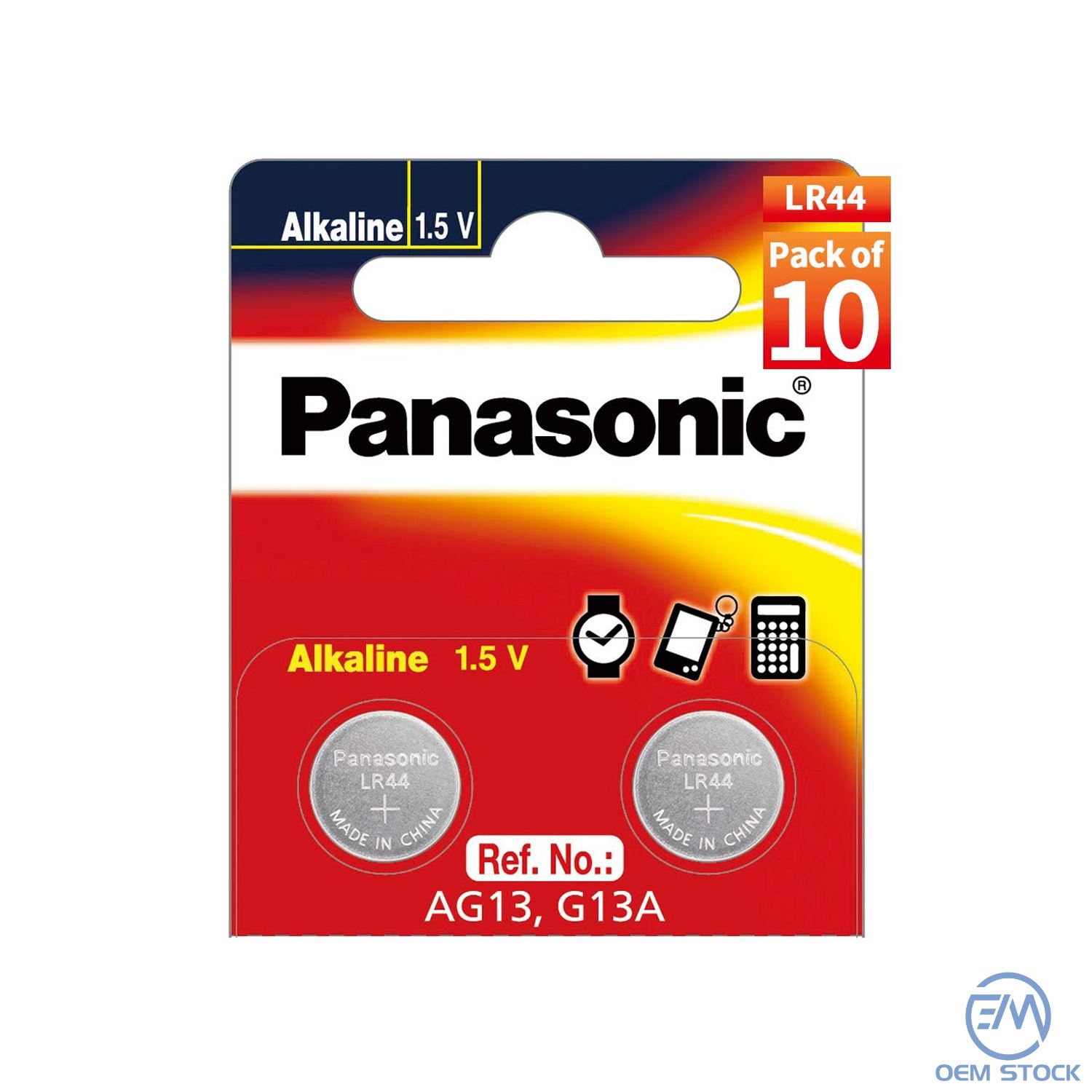
2. LR44 Battery – Experience-Based Overview

2.1 How LR44 Performs in Real Devices

LR44 Battery

The LR44 is an alkaline cell rated at about 1.5 V. It works reasonably well in devices that are not voltage-sensitive. In my own usage, LR44 performs acceptably in:

  • Small LED keychain flashlights
  • Laser pointers
  • Children's toys
  • Basic remote controls

But in devices that require stable voltage-such as digital calipers or medical tools-the LR44 tends to produce flickering displays, unsteady readings or reduced performance as it drains.

2.2 Technical Specs (Typical Industry Values)

  • Voltage: 1.5 V (drops continuously)
  • Capacity: approx. 110–130 mAh
  • Chemistry: Alkaline (MnO₂)
  • Shelf life: 3–5 years
  • Discharge behavior: sloping curve

2.3 Strengths and Limitations

Strengths:

  • Very low cost
  • Widely available worldwide
  • Good for low-demand devices

Limitations:

  • Significant voltage drop over time
  • Shorter lifespan than silver-oxide batteries
  • Can cause inaccurate readings in instruments

3. 357 / SR44 Battery – Professional Silver-Oxide Cell

3.1 Why Technicians Prefer 357

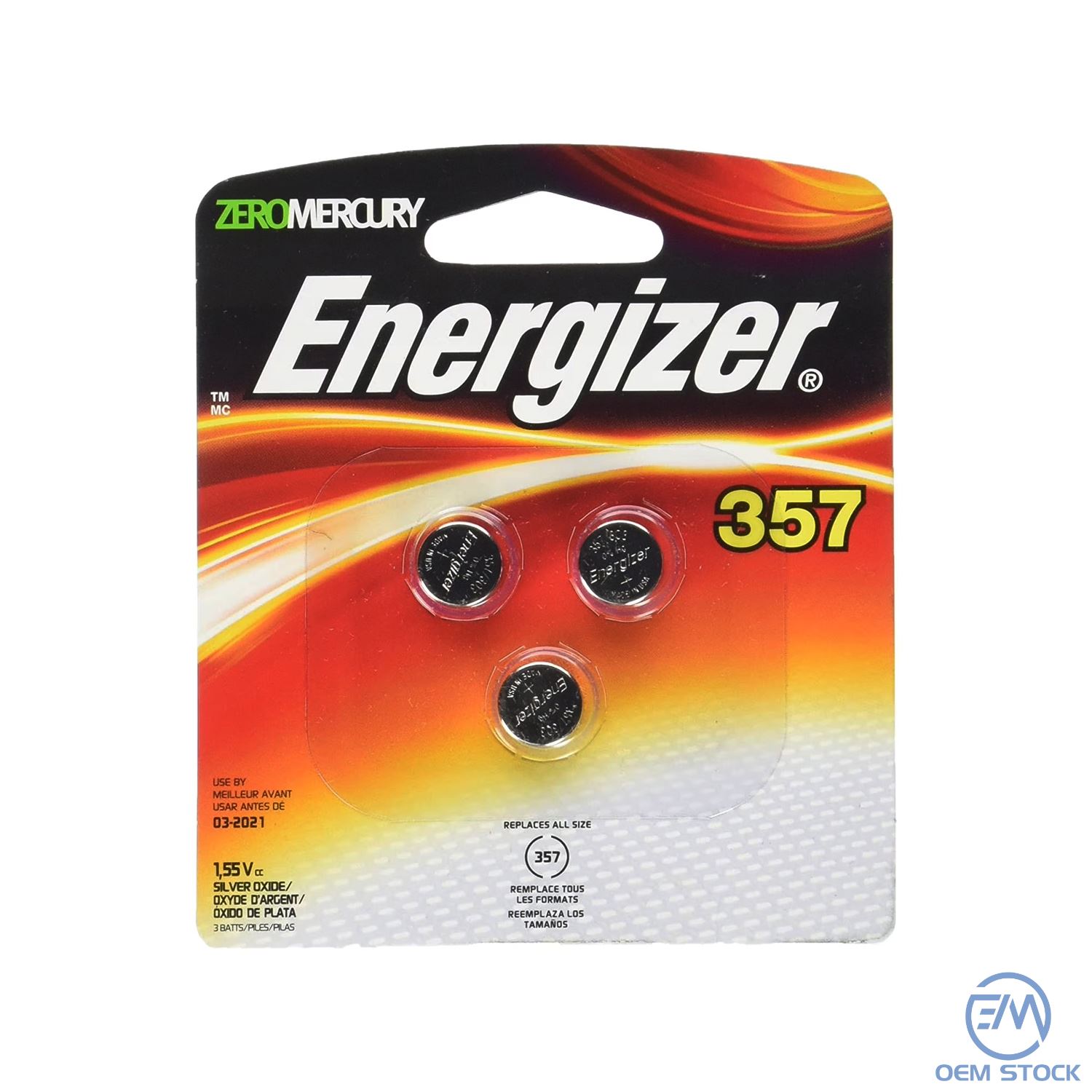
357 Battery

The 357 (also labeled SR44 or SR44W) is built with silver-oxide chemistry, producing a remarkably stable voltage of:

1.55 V sustained for almost the entire discharge cycle.

If you've ever replaced a battery in a professional timing instrument or a precision watch, you'll notice that most manuals specifically state:

"Use silver-oxide cell only."

This is because many precision circuits are designed around the stable discharge profile of silver-oxide chemistry.

3.2 Technical Specs Based on Real Manufacturer Data

  • Voltage: 1.55 V (flat discharge curve)
  • Capacity: approx. 150–200 mAh
  • Chemistry: Silver-oxide (Ag₂O)
  • Shelf life: 5–10 years
  • High-drain performance: Excellent

3.3 Notable Brands

  • Energizer 357/303 – dual-purpose, industry benchmark
  • Murata SR44W – highly stable for watches and sensors
  • Renata 357 – widely used in Swiss watches
  • Maxell SR44 – strong reliability and long shelf life

4. Side-by-Side Comparison: LR44 vs 357

Feature LR44 357 / SR44
Chemistry Alkaline Silver-Oxide
Nominal Voltage 1.5 V 1.55 V
Capacity 110–130 mAh 150–200 mAh
Voltage Stability Declines steadily Flat, highly stable
Ideal Applications Toys, LEDs, laser pointers Watches, instruments, medical devices
High-Drain Capability Limited Excellent
Shelf Life 3–5 years 5–10 years
Price Low Moderate

5. Real-World Function Differences

5.1 Voltage Decline vs Voltage Stability

The biggest functional difference is how the voltage behaves:

  • LR44: voltage declines gradually. Result: dimmer LEDs, slower watch movement, unstable displays.
  • 357: voltage remains almost identical until the very end. Result: consistent performance and accuracy.

5.2 Performance in Cold or Hot Conditions

From field testing, silver-oxide cells consistently outperform alkaline cells in either cold workshops or outdoor environments. Alkaline LR44 batteries often drop voltage rapidly below 10°C.

6. Application Comparison

6.1 When LR44 is Enough

LR44 performs well in devices that don't rely on precise voltage:

  • Laser toys
  • Flashlight keychains
  • Basic electronics kits

6.2 When 357 is the Only Correct Choice

If you are servicing or maintaining any of the following, always choose silver-oxide 357/SR44:

  • Analog watches
  • Digital calipers & micrometers
  • Blood glucose meters
  • Infrared thermometers
  • Precision timers
  • Professional laser modules

7. Lifespan Comparison

Based on manufacturer data and workshop testing:

  • 357 batteries typically last 30–70% longer than LR44
  • 357 maintains full voltage until nearly empty
  • LR44 drops continuously, often causing "weak battery" symptoms early

8. LR44, 357, and 303 Relationship Explained

8.1 LR44 Equivalent Names

  • LR44
  • A76
  • AG13
  • L1154

8.2 357 and 303 – What's the Difference?

Both are silver-oxide cells:

  • 357 / SR44 / SR44W: high-drain
  • 303: low-drain (often for classic watches)

Energizer's 357/303 is a dual-purpose cell designed to handle both loads.

8.3 Interchange Rules

  • 357 ↔ 303: Usually interchangeable
  • 357 ↔ LR44: Fits physically; 357 is a superior upgrade
  • LR44 ↔ 303: Not recommended

9. FAQ – Clear Answers You Can Trust

Q1. Can I use LR44 in place of 357?

Only for simple devices. Not recommended for watches or instruments.

Q2. Does 357 last longer?

Yes. Silver-oxide chemistry offers significantly longer runtime and stable voltage.

Q3. Why is 357 more expensive?

Silver-oxide chemistry and higher manufacturing standards increase cost, but also reliability.

Q4. Are A76 and LR44 the same?

Yes, both refer to the same alkaline cell.

Q5. What's the best brand for 357?

Energizer, Murata, Renata and Maxell consistently score highest in stability and leakage resistance.

10. Final Verdict

If you want the most reliable and stable performance-especially for precision electronics-the 357 silver-oxide battery is the clear winner.

The LR44 remains a perfectly fine choice for everyday, non-critical devices. But for anything involving timekeeping, measurement or health, the 357/SR44 is not just better-it's the correct specification.

Hot Sale Parts

More >
HRL 1234WF2FR
HRL 1234WF2FR CSB Battery
TPS62242DRVRG4
TPS62242DRVRG4 Texas Instruments
TPS62242DRVR
TPS62242DRVR Texas Instruments

Related information

Best CR2032 Batteries in 2026: Top Brands Compared
2026.06.10 Best CR2032 Batteries in 2026: Top Brands Compared
Thick Film vs Thin Film Resistors: Practical Differences Every Engineer Should Know
2025.12.02 Thick Film vs Thin Film Resistors: Practical Differences Every Engineer Should Know
Ultimate Resistor Guide 2025: Types, Tolerances, Power Ratings & Practical Design Tips
2025.11.29 Ultimate Resistor Guide 2025: Types, Tolerances, Power Ratings & Practical Design Tips
LED Resistor Calculator: Step-by-Step Guide for Beginners
2025.10.29 LED Resistor Calculator: Step-by-Step Guide for Beginners
Search Product

Search

Product Category

Products

Tel Us

Phone

My Acccout

User

OEM STOCK
OEM STOCK
[email protected]